

Every now and then, I meet someone who seems perfectly wired for fundraising. Recently, after visiting with a new Development Director, I found myself thinking exactly that.
She brought a strong sales background, a genuine love of people, and a heart for a mission larger than herself. In other words, she already possessed many of the qualities that make exceptional fundraisers successful. Yet, like many professionals entering the fundraising field, she was looking for a framework that would help her understand the art and science of fundraising and turn it into a repeatable process.
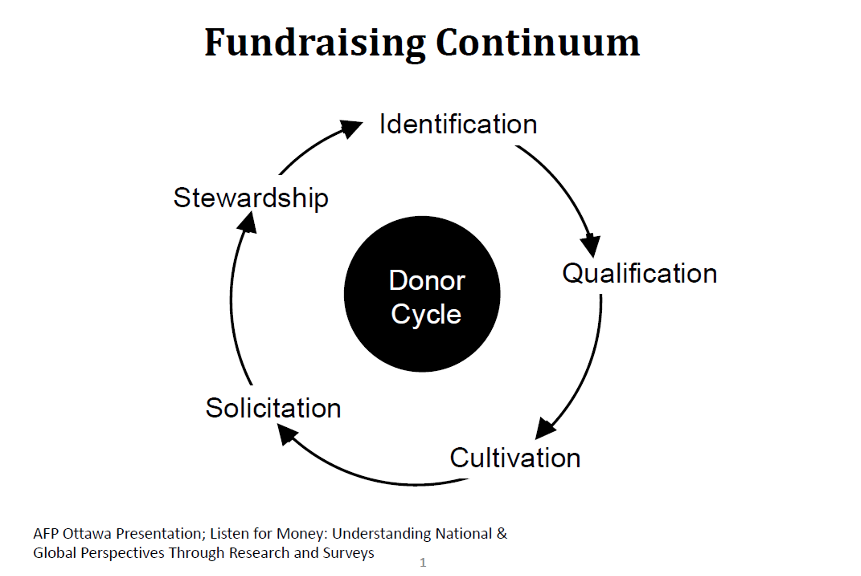
That's when I shared one of the simplest and most useful fundraising tools I know: the Fundraising Continuum.
Fundraising Is About Moving Relationships Forward
One of the biggest misconceptions about fundraising is that it is only about asking people for money.
It isn't.
Fundraising is about building relationships and helping people connect their passions and values to a mission they care about. When viewed through that lens, fundraising becomes much less intimidating and much more strategic.
The Fundraising Continuum provides a roadmap for that work. Rather than focusing on a single ask, it helps us think about how we move individuals from being completely unaware of our organization to becoming loyal supporters and champions of our cause.
While organizations may use different terminology, the progression generally follows a similar path:
Awareness → Interest → Involvement → Investment → Stewardship
Each stage represents a deeper level of engagement and commitment.
The Power of Knowing Where Someone Is in the Cycle
One of the most valuable questions a fundraiser can ask is, "Where is this person currently on the continuum?"
If someone has never heard of your organization, inviting them to make a major gift probably isn't the next best step.
Likewise, if someone has been volunteering, attending events, and expressing enthusiasm for your mission, it may be time to have a meaningful conversation about financial support.
The key is to match the right action to the right stage of the relationship.
For example:
A new prospect may simply need an introduction to your mission.
An interested community member may benefit from a tour or an invitation to attend an event.
A volunteer may be ready for encouragement to invest financially.
A committed donor may need more thoughtful stewardship and updates about the impact of their gifts.
A passionate supporter may become one of your strongest ambassadors, introducing others to the cause or leaving a legacy through planned giving.
When fundraising teams of staff and volunteers understand where people are on the continuum, their next steps become much clearer.
A Better Way to Build a Fundraising Plan
The Fundraising Continuum is more than a relationship-building framework—it is also an excellent planning tool.
Many organizations create fundraising plans by focusing exclusively on revenue goals. While financial targets are important, they can’t be the sole driver of the plan.
A strong approach to achieve the revenue goals is to identify key donors and prospective donors, determine where each person sits on the continuum, and then intentionally plan activities that move them to the next stage.
Ask yourself:
Which donors need cultivation – a call, visit, email, invitation, tour?
Which current supporters should receive additional stewardship through recognition, thank you calls, invitations to engage, and impact reports?
Who is ready for an invitation to give?
Who might introduce us to new supporters?
What actions will move each relationship forward?
Suddenly, fundraising becomes less about reacting and more about strategically guiding relationships over time. It also provides a practical framework for setting priorities and timelines throughout the fiscal year and can be especially valuable as organizations prepare for year-end fundraising efforts.
Fundraising Becomes Second Nature
One of the reasons I love the Fundraising Continuum is its simplicity.
When fundraising staff and board leaders commit these stages to memory and begin thinking through each relationship in this way, fundraising becomes far more natural. Conversations feel less transactional. Activities become more intentional and results become more predictable.
Instead of constantly wondering, "What should I do next?" you simply ask, "What is the next appropriate step in this relationship?"
That's a question every successful fundraiser learns to answer.
Final Thought
Great fundraising is not about pressure, nor is it about rushing to make the ask. Instead, it’s about helping people discover meaningful ways to connect with a mission they care about.
When you understand the fundraising continuum and intentionally move relationships forward one step at a time, fundraising stops feeling like a mystery and starts becoming a ministry of connection.
That’s the lesson I hoped to share with the new Development Director who inspired this article. Every donor relationship begins somewhere, and the most successful fundraisers simply learn how to help people take the next step.
And that's where lasting support—and lasting impact—begins.